
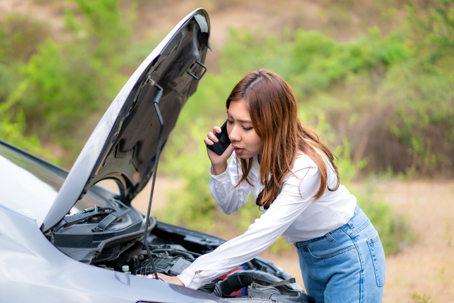
Summer in Southern California is beautiful — until your car starts acting up. Hot weather puts enormous stress on vehicles, and for some drivers, the heat does more than cause discomfort. It exposes problems that were hiding all along. If your car has been in and out of the shop, or if warm weather seems to make things worse, you may be dealing with something more serious than a bad battery. You may have a lemon.
Don't wait to find out where you stand. If your car has a repeating problem that the dealer just can't seem to fix, call us now at (949) 390-9695 or fill out our online contact form for a free case review.
Why Summer Heat Turns Up the Heat on Car Problems
Heat is hard on cars. When outdoor temperatures rise, so does the temperature inside your engine, your battery, and your electrical system. Small problems that seemed manageable in cooler months can suddenly get a lot worse.
Think of it like a crack in a wall. You might not notice it in winter, but when the house shifts in summer heat, that crack gets bigger fast. The same thing happens with hidden defects in vehicles.
If you noticed new warning lights, strange smells, or sudden breakdowns as the weather warmed up, that timing is not a coincidence.
Common Defects That Show Up in the Summer Heat
Not every car problem that appears in summer is heat-related. But there are certain defects that heat is particularly good at uncovering. Here are some of the most common ones:
- Cooling system failures: Your car's cooling system keeps the engine from overheating. If there's a defect in the radiator, water pump, or coolant hoses, high temperatures can push the system past its limits and cause the engine to overheat.
- Battery problems: Car batteries lose power faster in extreme heat. A battery that seemed fine in spring may die suddenly during a heat wave, especially if it has an underlying manufacturing issue.
- Air conditioning defects: A broken A/C in Southern California summer is more than an inconvenience — it can be a safety issue. If your A/C stops working repeatedly or never worked properly, that can count as a defect.
- Electrical and software glitches: Heat causes metal and wiring to expand, which can trigger short circuits or software errors. Random warning lights, systems that freeze up, or features that stop working on hot days are all red flags.
- Transmission issues: Heat puts extra stress on automatic transmissions. If your car slips between gears, hesitates, or shudders in warm weather, a faulty transmission could be to blame.
These are not just minor annoyances. If any of these issues keep coming back after repairs, they could be the foundation of a legitimate lemon law claim.
What Is the Lemon Law, and How Does It Work?
The lemon law is a set of consumer protection rules designed to help people who bought or leased a defective vehicle. In California, the law is known as the Song-Beverly Consumer Warranty Act. It's one of the strongest consumer protection laws in the country.
Here's the basic idea: if you buy a new vehicle and it has a serious defect that the manufacturer or dealer cannot fix after a reasonable number of repair attempts, you may be entitled to a full refund or a replacement vehicle. The law also requires the manufacturer to pay your attorney's fees if you win, so in most cases, hiring a lemon law attorney costs you nothing out of pocket.
A "serious defect" means a problem that significantly affects the safety, use, or value of the vehicle. It doesn't have to be a catastrophic breakdown. A recurring A/C failure, a persistent check engine light, or an electrical issue that won't go away can all qualify.
How Many Repair Attempts Are Enough?
This is one of the most common questions people ask, and it's a fair one. The answer is: it depends on the situation.
Under California lemon law, a vehicle is generally considered a lemon if the manufacturer or its authorized repair shop has made two or more repair attempts on a defect that could cause serious injury or death, or four or more repair attempts on any other substantial defect. The vehicle also qualifies if it has been out of service for 30 or more days total due to repairs.
Here are a few things to know about the repair attempt requirement:
- Each time you bring your car in for the same problem, that counts as a repair attempt — even if the dealer says they "couldn't duplicate" the issue.
- Repair attempts don't have to happen in a row. They can be spread out over months.
- The defect does not have to be completely irreparable — it just has to keep coming back.
- You do not need to prove what is mechanically wrong. You just need to show that the problem keeps recurring and wasn't fixed.
Keeping a record of every service visit is one of the most important things you can do. Save every repair order, invoice, and any written communication with the dealer.
Why Southern California Summers Make Things Complicated
Southern California heat is no joke. Temperatures regularly hit the high 90s and above in many inland areas, and even coastal communities like Laguna Beach see summer heat that stresses vehicles in ways that cooler climates simply don't.
This matters for lemon law cases for a few reasons. First, heat-triggered defects can be hard to replicate when temperatures drop, which sometimes makes dealers say they can't find the problem. Second, the stress of summer driving — idling in traffic, running the A/C constantly, highway driving in high heat — can accelerate the appearance of defects that might have gone unnoticed for another year.
If your car behaves differently in summer, or if problems only show up on hot days, document everything. Write down the date, the temperature, where you were driving, what happened, and how long it lasted. That kind of detail can make a real difference in a lemon law case.
Don't Ignore the Warning Signs
It can be tempting to keep bringing your car back to the dealer, hoping this time they'll fix it for good. But delays can hurt you. The California lemon law applies to vehicles within the manufacturer's warranty period — usually the first few years of ownership.
The longer you wait, the more likely you are to run out of warranty coverage. And while there are some exceptions, waiting too long can limit your options.
If your gut is telling you something is seriously wrong with your car and the dealer keeps sending you home with the same problem, listen to that instinct. You have rights, and there are people ready to help you use them.
What to Do Right Now
If you think your car might be a lemon — especially if summer heat has made things worse — here are the most important steps to take right away:
- Keep all paperwork. Every repair order, every invoice, and every note from the dealer is important. If you've thrown some away, call the dealership's service department and ask for copies.
- Write down a history of the problem. When did it start? How often does it happen? What did the dealer say each time? A simple written timeline can be very useful.
- Don't make any verbal deals with the dealer or manufacturer. Some companies offer informal "goodwill" repairs or small cash offers. Before you accept anything, talk to an attorney — you may be giving up more rights than you realize.
- Contact a lemon law attorney. A qualified attorney can look at your repair history and tell you quickly whether you have a claim. The consultation is usually free, and if you have a valid case, you typically pay nothing out of pocket.
Call a Laguna Beach Lemon Law Attorney at O’Connor Law Group, P.C.
If this summer has made it impossible to ignore the problems with your car, now is the time to act. O’Connor Law Group, P.C. is here to help you understand your rights and figure out your next steps. Our team works hard for every client — no matter how big or small the case — because we know how much you depend on your vehicle.
You shouldn't have to keep making repair trips and hoping for a different result. California's lemon law exists to protect you. Let O’Connor Law Group, P.C. help you put it to work.
Call us today at (949) 390-9695 or reach out through our online contact form to schedule a free, no-obligation case review. There's no cost to find out where you stand.